
There’s a version of real estate development that is entirely about chasing density. The biggest deals, the tallest towers, the most competitive land markets. For a certain kind of developer, that world makes sense. For impact-driven developers, those who care as much about what a project does for a community as for a balance sheet, secondary markets are increasingly where the real opportunity lies.
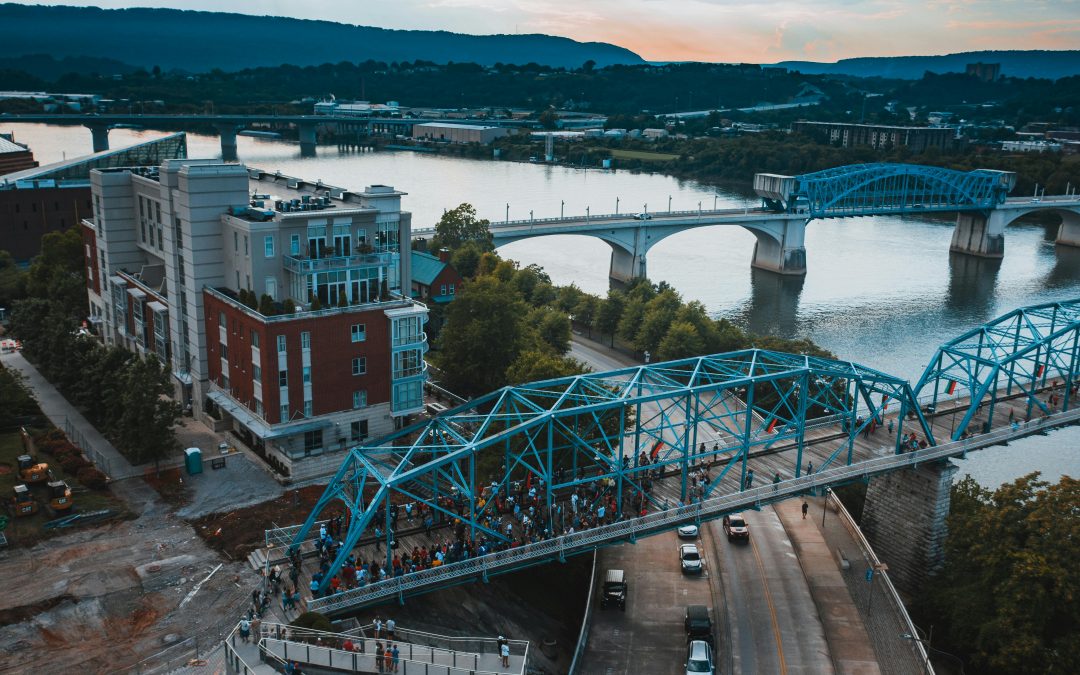
Secondary markets are mid-sized cities that sit outside the major coastal metros. Think Boise, Spokane, Tucson, Chattanooga, Columbus, or Baton Rouge. They don’t always make the headlines, and that’s exactly the point. While capital continues to pile into gateway cities and compress returns, secondary markets offer a combination of growth fundamentals, community needs, and development economics that is genuinely difficult to find elsewhere.
I’ve spent time developing across different types of market. What I’ve come to understand is that for developers who care about impact, secondary markets don’t just offer bigger financial returns. They offer bigger stakes. The projects you build shape the city.
The Supply-Demand Gap Is Real
The housing crisis is not a coastal phenomenon. Secondary markets across the country are experiencing acute shortfalls in workforce and attainable housing. Remote work has accelerated population migration, straining cities not built to absorb rapid growth. The infrastructure and housing stock that served a stable population of 200,000 people is suddenly serving 350,000, with more arriving every quarter.
This gap creates genuine development demand that isn’t speculative. In many secondary markets, the need for well-designed, appropriately priced housing is acute and visible in ways that don’t require sophisticated market analysis to confirm. You can see it in vacancy rates near zero, in rents rising faster than wages, and in conversations with local employers who can’t recruit talent because there’s nowhere for people to live.
For impact-driven developers, that need is the starting point. You’re not manufacturing demand or engineering a niche. You’re solving a real problem for real people, and the market will reward you for it.
The Economics Work Differently
Land in secondary markets is not cheap in absolute terms, but it is dramatically less expensive compared to what you can build and charge. That spreads the difference between what it costs to develop and what the market will support is where developer margin lives. In gateway cities, that spread has been compressed to the point where many projects pencil only with extraordinary assumptions about rent growth or exit cap rates.
In secondary markets, the math is often more honest. You can build workforce housing that meets a genuine need, delivers a competitive return, and doesn’t require you to underwrite aggressive assumptions that depend on everything going right. Conservative underwriting in a secondary market can still produce strong returns. That’s not always true in primary markets, where the margin for error is thin, and the premium for land requires you to stretch.
Construction costs have converged nationally, but land hasn’t. That divergence is the secondary market developer’s structural advantage, and it’s not going away anytime soon.
Local Government Is a Partner, Not Just a Gatekeeper
In major metros, the entitlement process can be a year-long battle with planning departments, neighborhood groups, environmental reviews, and political dynamics that have little to do with the merits of your project. The cost and time embedded in that process add meaningful friction to every deal.
Secondary market municipalities are often genuinely eager for quality development. City councils want to attract the tax base. Planning departments want to show progress. Economic development offices are looking for developers who understand their community and are committed to building for the long term rather than flipping assets.
This doesn’t mean secondary markets are without regulatory complexity. But the posture of local government is frequently different. When you walk into a meeting as a developer who has done real homework on a city’s housing needs, workforce demographics, and neighborhood dynamics, you are often treated as a problem-solver rather than a threat. That relationship makes deals move faster, and it makes the development experience more sustainable over time.
The Impact Is Legible
One of the quiet frustrations of large-market development is that your project can be excellent and still barely move the needle onto the problems you care about. Build 200 units of workforce housing in a metro area of four million people, and you’ve done something good. But the systemic challenges around affordability, displacement, and neighborhood stability are so large that your contribution, while real, is nearly invisible at the city level.
In a secondary market, 200 units is a different kind of statement. It reshapes a neighborhood. It provides housing for a meaningful percentage of the local workforce. It changes what’s possible for employers trying to grow, for teachers and nurses, and tradespeople trying to live near where they work. The project becomes part of the city’s story in a way that matters to the people who live there.
For developers motivated by impact, that legibility is not to be taken lightly. It changes the nature of the work. You are being built in a place where people know your project by name, where the community sees the difference, and where the relationship between developer and city is genuinely reciprocal.
The First-Mover Advantage Is Still Available
Capital follows proof of concept. In most secondary markets, institutional capital is still arriving rather than entrenched. That means local developers, regional operators, and mission-aligned investors can still acquire the best sites, establish relationships with local government, and build a pipeline before competition intensifies.
This window won’t stay open indefinitely. The same demographic trends and economic fundamentals that make secondary markets compelling to impact-driven developers are also visible to institutional capital. The question is whether you move early enough to shape what gets built or arrive later to compete for assets that have already been priced for the growth you identified.
Developers who build genuine community knowledge, who understand specific cities, specific neighborhoods, and specific unmet needs, have a durable edge that capital alone can’t replicate.
Building Where It Matters
The case for secondary markets isn’t a consolation prize for developers who couldn’t compete in gateway cities. It’s a coherent thesis about where need is highest, where returns are most honest, where government is most collaborative, and where the work you do has the most visible effect on real people’s lives.
Impact-driven development has always required a willingness to look where others aren’t looking. Right now, that means looking at the cities that are growing fast, housing their residents poorly, and waiting for developers with both the capital and the conviction to build something better.
The opportunity is there. The question is who shows up to take it seriously.
Akki Patel is a real estate developer and entrepreneur. Follow his work at akkipatel.com and lrecompanies.com