
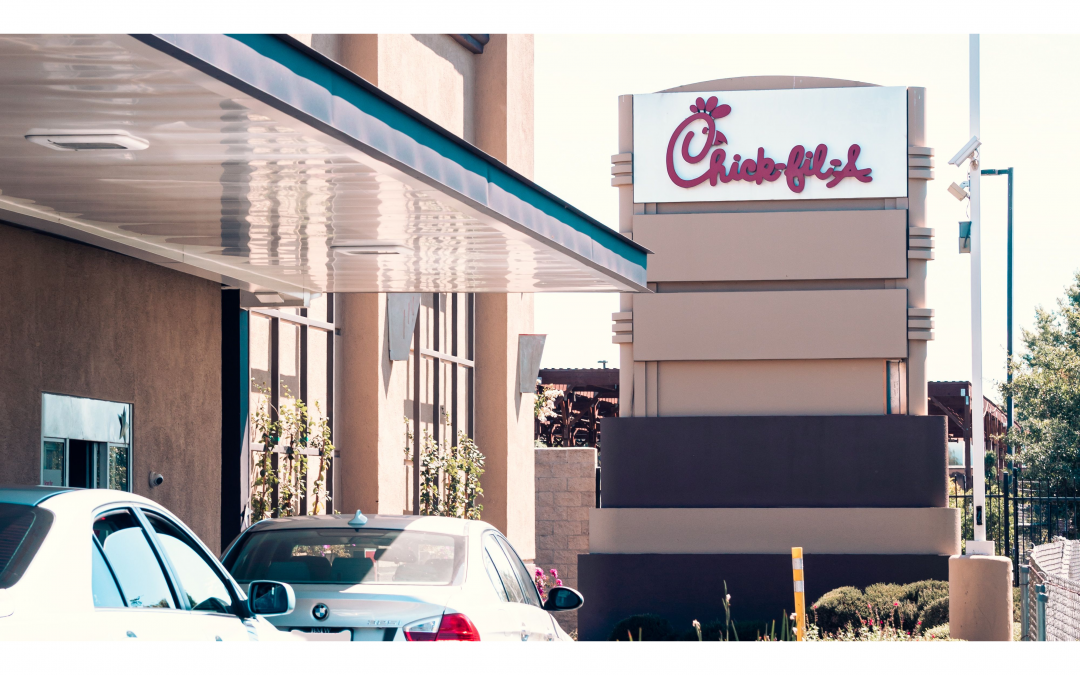
In commercial real estate, yield is often the headline. But savvy net lease investors know that yield is only one side of the equation. The other side is durability, the confidence that income will keep coming, the tenant will keep renewing, and the property will keep appreciating. By that measure, no QSR brand in America offers a more compelling landlord thesis than Chick-fil-A.
The numbers are staggering. Average unit volumes for non-mall Chick-fil-A locations reached a record $9.3 million in 2023, an 8.1% increase over the previous record of $8.67 million in 2022. In 2024, freestanding drive-thru units averaged a median annual sales volume of $9.227 million across the broader system, with some individual locations surpassing $19 million. These are not quick-service restaurant volumes. These are fast-casual and casual-dining volumes in a counter-service format on a site that occupies barely an acre.
What Trophy-Tier Cap Rates Actually Signal
Chick-fil-A properties trade at some of the lowest cap rates across the net lease universe. As of Q2 2025, Chick-fil-A ground leases were priced between 4.29% and 4.50%, alongside McDonald’s at 4.38% to 4.40%, and meaningfully tighter than most other QSR brands. In Q1 2025, Chick-fil-A cap rates fell another 30 basis points as investor demand intensified.
At a typical $5.71 million price point, with a 13.8-year average remaining lease term and an average rent of $53.25 per square foot, the rent-to-sales ratio for a Chick-fil-A location is just 2.30%. That’s leaner than McDonald’s at 2.58% and far leaner than most of the retail sector. For landlords, a low rent-to-sales ratio means the tenant is generating dramatically more income than needed to service the lease, reducing default risk to near zero and making renewal a near-certainty.
SRS Real Estate Partners completed $79 million in Chick-fil-A property sales across the Sun Belt in early 2026 and recorded over $120 million in total Chick-fil-A transaction volume over the prior 12 months. Private buyers using 1031 exchanges dominated these deals, which is telling. When investors deploy 1031 proceeds, they are making their highest-conviction hold decision. Chick-fil-A continues to capture that capital.
The Operational Secret Behind the Real Estate Premium
What drives Chick-fil-A’s unit economics isn’t magic. It’s the combination of constraint and discipline. The brand operates only six days per week, closing entirely on Sundays, and still leads the industry in AUV. This means the per-open-day productivity of a Chick-fil-A location is exceptional. Location selection is rigorous, with site teams consistently identifying high-traffic intersections with strong household density and income levels. The brand does not franchise through traditional investor channels; operators are selected through a highly competitive process and are expected to be owner-operators, not absentee investors.
The result is a franchise system with alignment between brand standards and operational execution that other chains struggle to replicate. From a landlord’s perspective, that alignment means every lease renewal is backed by an operator with skin in the game and a brand that controls quality from the top down.
What This Means for the Pad Site Market
When a QSR brand consistently generates $9 million-plus in AUV per location, the underlying real estate benefits in two ways. First, the tenant’s ability to pay rent is essentially unquestioned; the coverage ratio is so healthy that even a significant sales decline would leave the rent obligation fully covered. Second, the location itself becomes valuable independent of its current occupancy. A 1.0-acre hard corner that Chick-fil-A’s site team has validated has proven trade-area demand and would attract other premium tenants if the brand ever vacated.
For net lease investors seeking maximum credit quality, real estate upside, and minimal management responsibility, Chick-fil-A pad sites are as close as the commercial real estate market offers to a blue-chip fixed-income instrument. The yield is tight. But in this context, tight pricing is the market’s honest assessment of quality.