
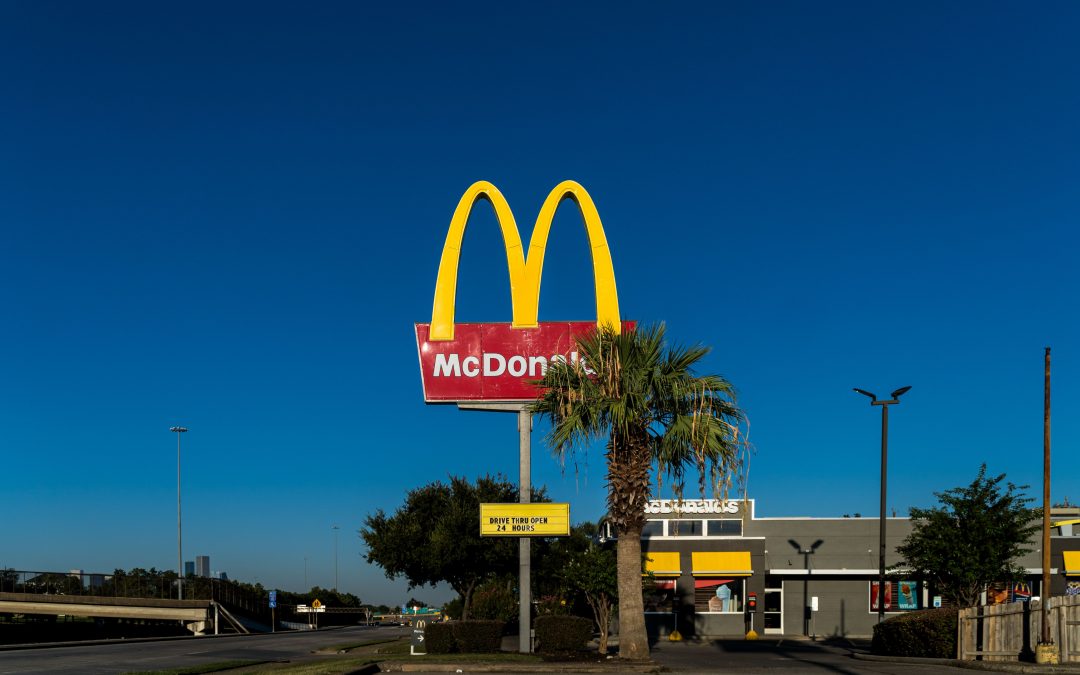
There is a reason McDonald’s ground leases trade at the tightest cap rates in the net lease universe, approximately 4.38% to 4.40% as of Q1 2026, right at or below the 10-year Treasury yield. The market has essentially concluded that a McDonald’s ground lease is a bond. The question isn’t whether McDonald’s will pay rent. The question is what the post-remodel generation of McDonald’s locations means for the landlords who own the land beneath them.
The answer, backed by one of the most ambitious capital programs in QSR history, is that they are worth more.
The Most Sophisticated Real Estate Company in Fast Food
At its core, McDonald’s is not a hamburger company. Former CFO Harry Sonneborn articulated this decades ago: “We are not technically in the food business. We are in the real estate business. The only reason we sell 15-cent hamburgers is that they are the greatest producer of revenue, from which our tenants can pay us rent.” That insight has not aged. Today, McDonald’s Real Estate Company manages property assets valued at more than $40 billion, generating average annual returns of 6.8%.
The company owns or controls the land and buildings for most of its roughly 14,000 U.S. locations, leasing them to franchisees and collecting rent as a percentage of sales. McDonald’s holds BBB+ (S&P) and Baa1 (Moody’s) investment-grade ratings, both with stable outlooks confirmed through mid-2025. Its 95% franchise model generates fee income regardless of individual unit performance. Annual corporate revenue is $25.9 billion. For an external landlord owning a McDonald’s-occupied property, the BBB+ credit behind the lease is the gold standard for QSR tenant quality.
What Remodels Do to Rent Coverage and Renewal Probability
McDonald’s “Accelerating the Arches” strategy has directed billions toward remodeling its physical footprint. Modern locations feature updated kitchen technology, integrated digital ordering, dedicated mobile pickup areas, and refreshed architecture. McDonald’s deployed AI-powered outdoor digital menu boards across 12,000 drive-thru locations, optimizing upsell strategies and reducing dwell time.
For landlords, a remodeled McDonald’s location has a meaningfully different risk profile than an aging unit on a legacy lease. Operators who have invested in equipment and building upgrades are far more likely to renew leases because they have a capital reason to stay. Remodeled locations also generate higher sales volumes, which directly improve rent coverage ratios and reduce default risk.
McDonald’s targets an operating margin above 46% in 2025, slightly below the 46.3% it achieved in 2024. This margin profile, maintained through a franchise model that routes revenue through rent and royalties rather than food costs, makes McDonald’s financial obligations exceptionally durable.
Ground Lease Premium: Why the Land Play Is the Right Frame
The most valuable way to own a McDonald’s location is through a ground lease, in which the landlord owns the land, and McDonald’s (or its franchisee) owns the improvements. Ground leases on McDonald’s properties trade at the tightest cap rates in the market for this reason: the landlord has essentially permanent ownership of a high-traffic, validated piece of commercial real estate, while McDonald’s bears all building costs, maintenance, and operational risk.
McDonald’s site-selection methodology requires a minimum daily traffic count of 20,000 vehicles, strong demographic density, and proximity to urban development. When the brand validates a location, it makes a multi-decade commitment based on one of the most sophisticated real estate research operations in American business. Owning the land beneath that validation is the definition of real estate durability.
For 1031 exchange investors seeking maximum credit quality, institutional-grade asset certainty, and passive income without management obligations, a McDonald’s ground lease remains the benchmark. The remodel wave doesn’t change that. It reinforces it.