
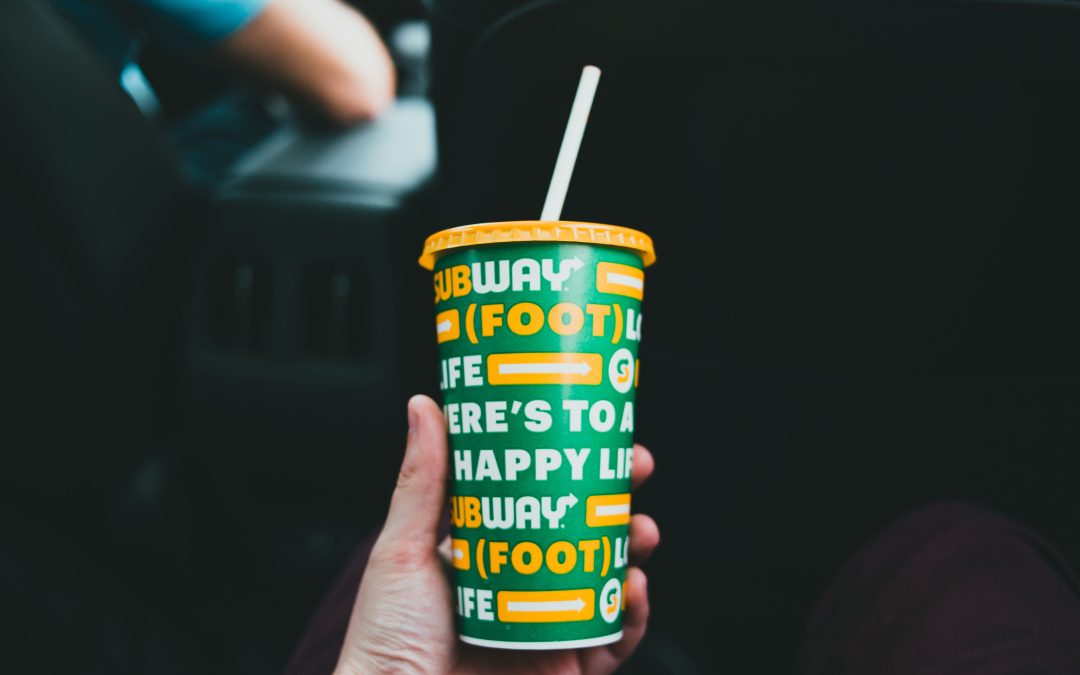
With 18,773 U.S. locations as of early 2026, Subway remains America’s largest restaurant brand by unit count. It operates in more strip centers, more inline spaces, and more suburban corridors than any other quick-service concept. Yet in net lease investment conversations, it is routinely overlooked, overshadowed by McDonald’s ground leases, Chick-fil-A pad sites, and the newest Chipotlane construction. That disconnect deserves examination.
Subway’s story is complicated right now, but it is not over. For landlords and investors who understand the nuances, that complexity creates real opportunity.
The Honest Assessment: Where Subway Stands
Let’s start with the challenges. Subway lost 729 net U.S. units in 2025, its steepest decline since 2021, leaving the domestic footprint at 18,773 locations. The brand has closed a net total of 3,417 restaurants since the start of 2021. Average unit volumes are estimated at $490,000 to $500,000, well below competitors’ $1 million-plus, including Jersey Mike’s ($1.4 million AUV) and Jimmy John’s ($1 million AUV).
The system was built around single-operator, low-capital franchisees, many of whom ran only one or two locations, leaving the franchise base fragmented and financially shallow. In a rising-cost environment, low-AUV operators with thin margins are most vulnerable to lease nonrenewal.
For landlords holding Subway leases in underperforming locations, the risk is real. Lease non-renewals are a genuine possibility, particularly for operators who cannot absorb the cost of Subway’s mandatory Fresh Forward remodel program.
The Case for Optimism: Roark Capital and the Operator Shift
Here is where the story changes. In 2023, Roark Capital completed its acquisition of Subway for approximately $9.55 billion, the largest franchise acquisition in restaurant history. Roark also owns Inspire Brands, which operates Arby’s, Buffalo Wild Wings, Sonic, Jimmy John’s, and Dunkin’. This is not a passive financial buyer. It is a sophisticated, operationally focused restaurant group with deep experience turning around struggling franchise systems.
The 2025 strategy under Roark has three clear priorities: improve franchisee profitability by increasing AUV, modernize the physical plant through Fresh Forward remodels, and grow digital ordering and the Subway Rewards loyalty program. Fresh Forward remodeled locations have shown compelling results, gross profit up 11%, traffic up more than 8%, and relocated Fresh Forward units generating 18% higher sales and 15% higher traffic than their pre-remodel counterparts.
Subway debuted more than 1,000 new units worldwide in 2025, despite domestic closures, supported by more than 30 master franchise agreements representing over 12,000 future international units. The brand also signed six new international master franchise agreements in 2025 across 10 countries. Roark’s operational platform and access to capital provide a credible pathway to franchisee consolidation, moving the system toward multi-unit, well-capitalized operators that create more durable NNN credit profiles.
What This Means for Landlords
For existing Subway landlords, the near-term focus should be on operator quality and AUV performance. A high-volume, multi-unit Subway franchisee operating three or four Fresh Forward locations in dense suburban corridors is a fundamentally different credit risk than a single-unit operator in a declining trade area. The gap between the best and worst Subway locations is wider than for almost any other QSR brand.
For investors considering Subway acquisitions, the opportunity lies in identifying remodeled, higher-AUV locations in strong trade areas with creditworthy operators, particularly in markets where the Roark-driven consolidation has already resulted in multi-unit franchisee control. These assets can trade at cap rates of 6.5% to 7.5%, offering a meaningful yield premium over trophy QSR names, while carrying a tenant with 60+ years of brand history and a well-funded new owner committed to the system’s recovery.
Subway’s chapter isn’t written yet. Landlords who understand where the brand is going, not just where it has been, may find the best opportunities in the most overlooked tenant in American commercial real estate.