
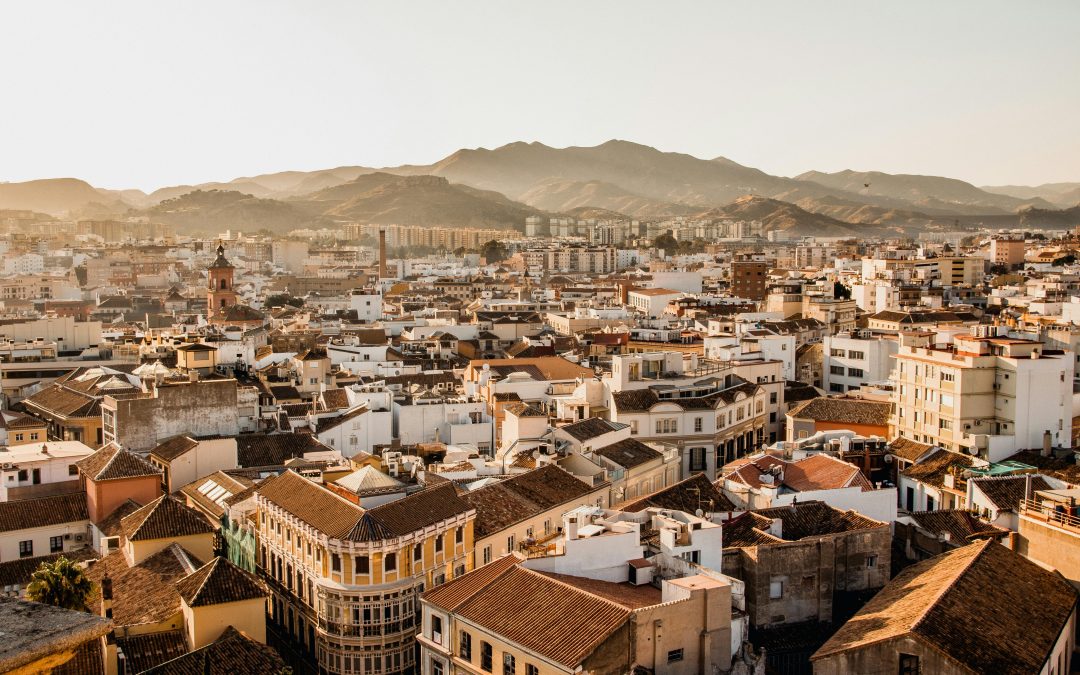
Walking through the whitewashed streets of Andalucía, I kept pondering retail real estate and how outdated the US seems in that area. That line from my travel notes stayed with me, even as I realized something else during the trip: American brands are everywhere and thriving.
I was somewhere between Ronda and Antequera, two small towns perched dramatically in southern Spain’s hills, when I first noticed the contrast. In the historic cores, life still revolves around the butcher who has run his shop for thirty years, the woman selling olive oil pressed from trees her grandfather planted, and the café where the same three men have been drinking coffee at the same corner table for decades. As I wrote in my original reflection, “These weren’t tourist attractions; they were useful, everyday parts of life.”
But step just outside the old town walls, and there they were. McDonald’s. Burger King. Popeyes. Starbucks. American brands are not only present, but also busy, modern, and deeply integrated into the daily rhythm of Spanish life.
And that’s when the real insight hit me: The American strip mall may feel outdated at home, but American retail concepts have become among the most successful exports worldwide.
The Duality of Spanish Retail: Heritage in the Center, Efficiency at the Edge
Spain’s small towns operate on two parallel tracks.
1. The historic core; human‑scaled, walkable, hyper‑local
This is the Spain that most travelers romanticize. Narrow streets. Independent operators. Generational businesses. As I observed in my original piece, “The towns weren’t fighting sprawl. They were built on the opposite principle: density of life, not density of parking.”
These districts are protected by geography, history, and zoning. They are not designed for drive‑thrus or 3,000‑square‑foot prototypes.
2. The modern perimeter, where global brands thrive
Drive five minutes out, and the landscape shifts. Retail parks. Roundabouts. Surface parking. And suddenly, the American playbook fits perfectly. Why? Because the global consumer, even in Europe, increasingly values:
- predictable quality
- fast service
- consistent pricing
- convenience
- digital ordering and loyalty ecosystems
American brands have mastered these attributes better than anyone.
Why American Brands Win Abroad
1. Operational excellence travels well
American QSR and retail chains have spent decades refining:
- supply chains
- franchising systems
- labor models
- menu engineering
- real estate selection
- brand consistency
These systems are plug-and-play in markets that have become more car-oriented and suburban over the last 20 years, including Spain.
2. They fill a gap, not replace a culture
The butcher, the baker, and the olive‑oil shop aren’t going anywhere. American brands don’t compete with them; they compete with:
- local fast‑food concepts
- regional chains
- convenience‑driven dining
Spain’s heritage retail thrives in the old town. American brands thrive everywhere else.
3. They meet the needs of a modern lifestyle
Dual-income households, commuting patterns, and digital ordering have reshaped consumer behavior worldwide. American brands were built for this world.
What This Means for American Retail Real Estate
Ironically, the model that feels stale in parts of the United States is performing exceptionally well overseas. The pad site. The drive-thru. The freestanding prototype.
The convenience-anchored retail node.
These formats are being replicated and, in many cases, enhanced across Europe, the Middle East, and Asia.
Meanwhile, in the U.S., we’re grappling with the opposite problem: How to restore walkability, local operators, and human-scaled retail in places that were never designed for them.
Spain reminded me that:
- American brands are global powerhouses.
- American retail formats are globally influential.
- But American towns often lack the very qualities, density, walkability, and mixed‑use that make Spanish retail so compelling.
A New Question for Developers Like Us
In my original reflection, I wrote: “When we decide what goes into a space, we subtly yet meaningfully choose what kind of place a town becomes.” That question still stands, but now with a global twist.
If American brands can thrive in Spain without erasing local culture, what can we learn from that balance? How do we build places in the U.S. where national tenants and local operators can coexist rather than compete for survival?
Spain didn’t just show me what American towns lack. It also showed me what American brands have achieved and what American developers can aspire to.